"Superintelligence" used to be a word from philosophy books and science fiction. In 2026 it's in company names, billion-dollar funding rounds and — since September — official US government language, where "AI" has been renamed "Super Intelligence" (SI).
But what does superintelligence actually mean? How is it different from the AI tools you use today, or from AGI? And who is trying to build it? This guide explains it in plain language — and what it means for your business right now.
Key Takeaways
- Superintelligence (ASI) is an intellect that greatly exceeds the best humans in virtually every field.
- Narrow AI exists today, AGI (human-level) has not been reached, and ASI is still hypothetical.
- OpenAI, Meta Superintelligence Labs and Safe Superintelligence (SSI) all say they are working towards it.
- Experts are divided on timing and risk — but today’s AI already delivers real value for businesses.
What Is Superintelligence?
The most widely used definition comes from Oxford philosopher Nick Bostrom, whose 2014 book Superintelligence brought the idea into the mainstream. He describes it as any intellect that greatly exceeds the cognitive performance of humans in virtually all domains of interest.
Two words in that definition matter most: "greatly" (not a little better — far better) and "all domains" (not just chess, coding or translation, but science, strategy, persuasion, creativity and everything else). A calculator beats you at arithmetic; that doesn't make it superintelligent.
Narrow AI vs AGI vs ASI: The Three Levels of AI
- Narrow AI (today): ChatGPT, Claude, Gemini, image generators, voice agents and recommendation engines. Very capable — often better than people at a specific task — but still limited, error-prone and dependent on human direction.
- AGI – Artificial General Intelligence: a system that can match humans across most economically valuable work, learning new tasks the way a person can. Labs disagree on exactly where the line is, and on whether it has been crossed. Most researchers say it hasn't.
- ASI – Artificial Superintelligence: the step beyond AGI — a system that outperforms the best humans in almost every field. This is what "superintelligence" means in research.
| Narrow AI | AGI | ASI (Superintelligence) | |
|---|---|---|---|
| Ability | Excellent at specific tasks | Human-level across most tasks | Far beyond the best humans in almost every field |
| Exists today? | Yes | No (disputed) | No — hypothetical |
| Examples | ChatGPT, Claude, Gemini, AI calling agents | None agreed | None |
| Business impact | Automation, content, support, SEO | Could handle most knowledge work | Could transform science and the whole economy |
So when the US government now calls today's AI "Super Intelligence", it's using the word as a new name for AI in general — not claiming that ASI has arrived.
Who Is Building Superintelligence?
Several of the world's best-funded AI companies now say superintelligence is their goal:
- OpenAI wrote in 2023 that superintelligence could be "the most impactful technology humanity has ever invented" — while also warning it could be very dangerous if not controlled.
- Meta Superintelligence Labs was set up by Mark Zuckerberg on June 30, 2025, led by Chief AI Officer Alexandr Wang, with Meta spending heavily to attract top researchers.
- Safe Superintelligence Inc. (SSI) was founded in June 2024 by former OpenAI chief scientist Ilya Sutskever, Daniel Gross and Daniel Levy. It was valued at a reported $30 billion in 2025, and in July 2026 announced a partnership with Nvidia that includes a planned $5 billion investment.
- Google DeepMind, Anthropic and others are also building ever more capable systems, and openly discuss AGI and what comes after it.
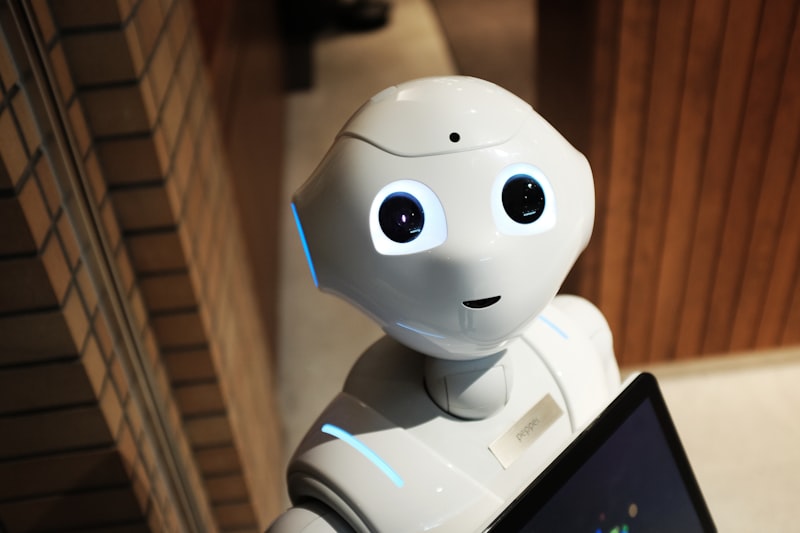
The biggest tech companies are now openly competing to build systems more capable than any human.
The Big Debate: Promise vs Risk
The promise: supporters say superintelligence could speed up scientific discovery dramatically — new medicines, cheaper clean energy, better materials — and lift productivity across the whole economy.
The risk: critics worry about systems that humans can't reliably control, huge job disruption and power concentrated in a few companies or countries. In October 2025 the Future of Life Institute published a Statement on Superintelligence calling for a ban on developing it until there is broad scientific agreement it can be done safely, and strong public support. More than 800 people signed it at launch, including AI pioneer Geoffrey Hinton, Apple co-founder Steve Wozniak and Richard Branson.
The sceptics: some researchers argue "superintelligence" isn't a coherent idea at all — that intelligence isn't one dial you can keep turning up — and that the hype distracts from real, present-day issues with AI.
When Could Superintelligence Arrive?
Honestly, nobody knows. Some AI company leaders talk about years, not decades. Many academics think it's much further away, or may never happen in the form usually described. Predictions have been wrong in both directions before. Plan for AI tools that get noticeably better every year, without betting your business on any specific date.
What It Means for Your Business Today
You don't need superintelligence to get a return from AI. Today's narrow AI is already good enough to change how a small or mid-sized business works:
- Respond to every lead instantly with WhatsApp automation and AI calling agents.
- Automate repetitive back-office work — data entry, follow-ups, reminders — with a connected AI workflow stack.
- Get found faster with AI-powered SEO and content tools.
- Build AI literacy in your team now, so you can adopt each new generation of tools quickly, whatever it ends up being called.
The businesses that benefit most from tomorrow's more powerful systems will be the ones already using today's well.
Frequently Asked Questions
What is the difference between AGI and superintelligence?
AGI (artificial general intelligence) means human-level ability across most tasks. Superintelligence (ASI) goes much further: an intellect that greatly exceeds the best humans in virtually every field. AGI would come first; superintelligence would be the step after it.
Does superintelligence exist today?
No. Today's AI tools are powerful narrow systems. They beat humans at specific tasks but are not generally superior to people across all domains. Most researchers agree that even AGI has not yet been achieved.
Why is the US calling AI "Super Intelligence" now?
A September 29, 2026 executive order told US federal agencies to use "Super Intelligence" (SI) instead of "Artificial Intelligence" in official communications. It's a change of name, not a claim that ASI exists. See our full breakdown of the SI rebrand.
Should small businesses worry about superintelligence?
Stay informed, but focus on today's opportunities. Practical AI such as chatbots, automation, AI calling and AI-assisted marketing already delivers measurable time and cost savings for Indian SMEs.
Sources
- Nick Bostrom – Superintelligence: Paths, Dangers, Strategies (2014)
- OpenAI – Introducing Superalignment (2023)
- CNBC – Zuckerberg announces Meta Superintelligence Labs (Jun 30, 2025)
- TechCrunch – Safe Superintelligence partners with Nvidia (Jul 27, 2026)
- Future of Life Institute – Statement on Superintelligence
- Wikipedia – Superintelligence